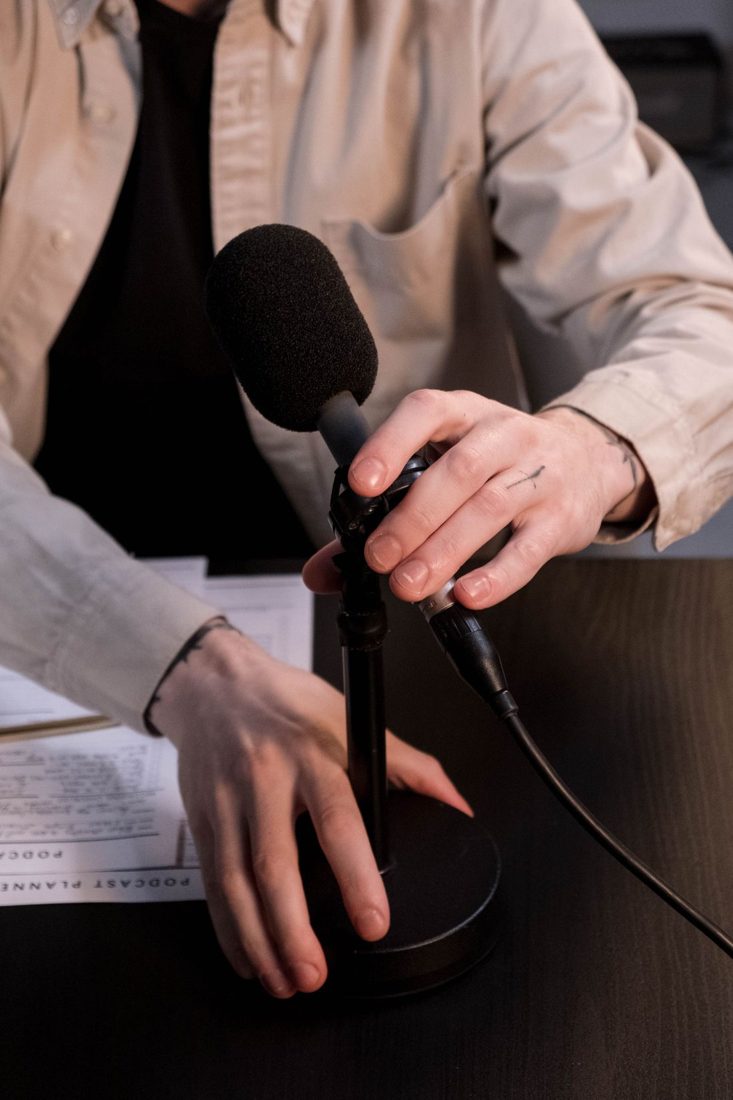
A strong burst on a word beginning with a sound such as P can overwhelm an otherwise clear voice recording. This often needs a placement adjustment rather than a dramatic change to the whole vocal tone. Record a short phrase containing the troublesome sounds and use it to compare positions, protection and delivery in a controlled way.
Identify the burst rather than every low sound
Listen to the test and note whether the problem occurs on particular consonants or across the whole voice. A plosive is not the same as naturally strong bass in a speaker’s voice. Treating all low frequencies as unwanted can make speech thin. Check that the microphone is being addressed from its intended side and that input gain is not creating a separate distortion problem. Make one correction at a time so you know which issue changed.
Adjust the air path
Try a modest change in microphone angle or position while keeping a comfortable speaking arrangement. The aim is to reduce the direct burst of breath without losing a clear voice. Shure’s recording guidance discusses positioning to reduce popping; the suitable arrangement depends on the microphone and speaker.
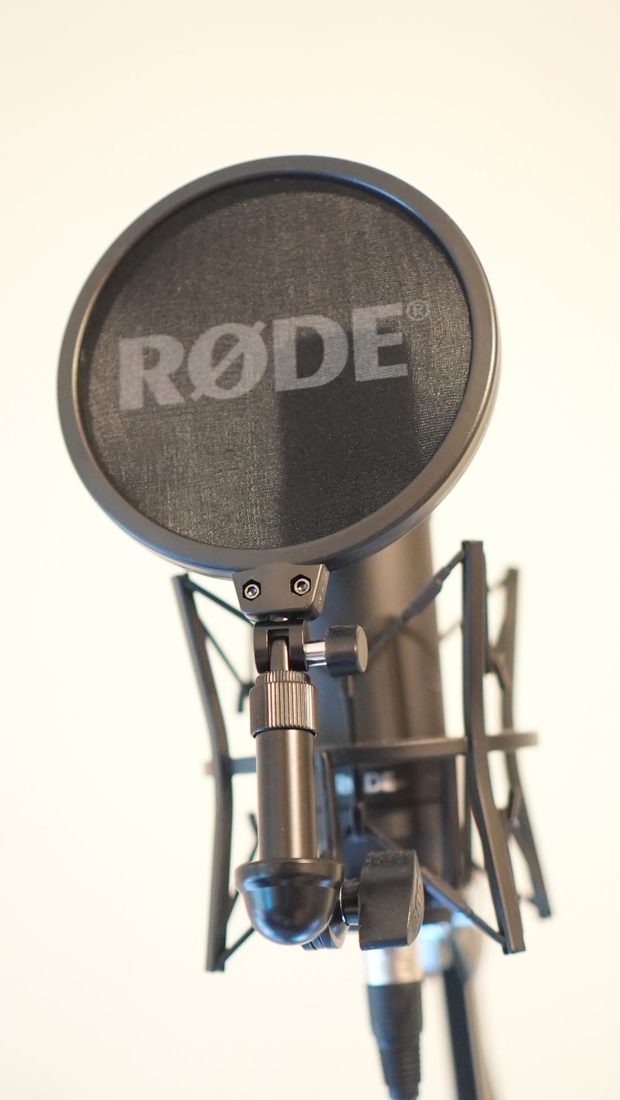
A compatible pop filter or the manufacturer’s intended wind protection may help. Follow its placement instructions and keep it clear of the capsule where required. Do not wrap the microphone in random fabric and assume that any reduction in brightness is a successful repair.
Compare the whole phrase
Record the same short passage after the adjustment. Listen to the troublesome consonants and the surrounding vowels and softer words. A position that removes a burst but makes the rest of the sentence distant or dull is not necessarily better. Ask the speaker to use an ordinary delivery rather than avoiding every P sound unnaturally. Keep enough room for normal movement, and make sure the pop filter does not obscure a script or encourage leaning into an awkward posture.
Repair isolated problems carefully
If one recorded word still contains a burst, consider a replacement take while the setup is available. In editing, a local adjustment may be more appropriate than applying a strong filter to the entire recording. Compare any processing with the untreated version at similar listening volume. Preserve intelligibility and the voice’s natural body. If several phrases need aggressive repair, revisit placement and re-record when possible rather than accepting a consistently damaged source.
Solve plosives as specifically as you can. Change the air path, use suitable protection and compare complete phrases so the voice remains clear. A restrained source adjustment usually gives you more useful speech than removing broad parts of the sound to suppress a few bursts.