A short podcast can feel harder to organise than a long conversation because there is less room for detours. Preparing does not require writing every spontaneous sentence in advance. It means knowing what the listener should understand, where the episode is going, and which material must be ready. A small amount of preparation can prevent a promising recording from becoming a collection of unrelated starts.
Write the promise in one sentence
Describe what this particular episode will help a listener do or understand. For example, an episode about choosing a first recording room is more manageable than one about everything involved in podcasting. If the promise contains several separate lessons, choose one for this episode and save the others as future topics.
Identify what your listener already knows. Define an unfamiliar term when it first matters, but avoid spending half the available time introducing background that the intended audience can reasonably bring. The promise should guide both what you include and what you leave out.
Build a route with enough detail to speak
Arrange a few talking points in an order that makes the idea easier to follow. Add a concrete example beneath each important point and mark any figure, quotation, or name that needs verification. A bare heading such as equipment is too broad to be useful at the microphone; a note about why distance matters gives you something specific to explain.
For an interview, turn the route into questions that invite clear answers. Share the topic and practical arrangements with the guest ahead of time. Agree how the recording will be used and allow time for their questions, rather than treating consent as something to settle after the conversation.
Prepare the recording desk
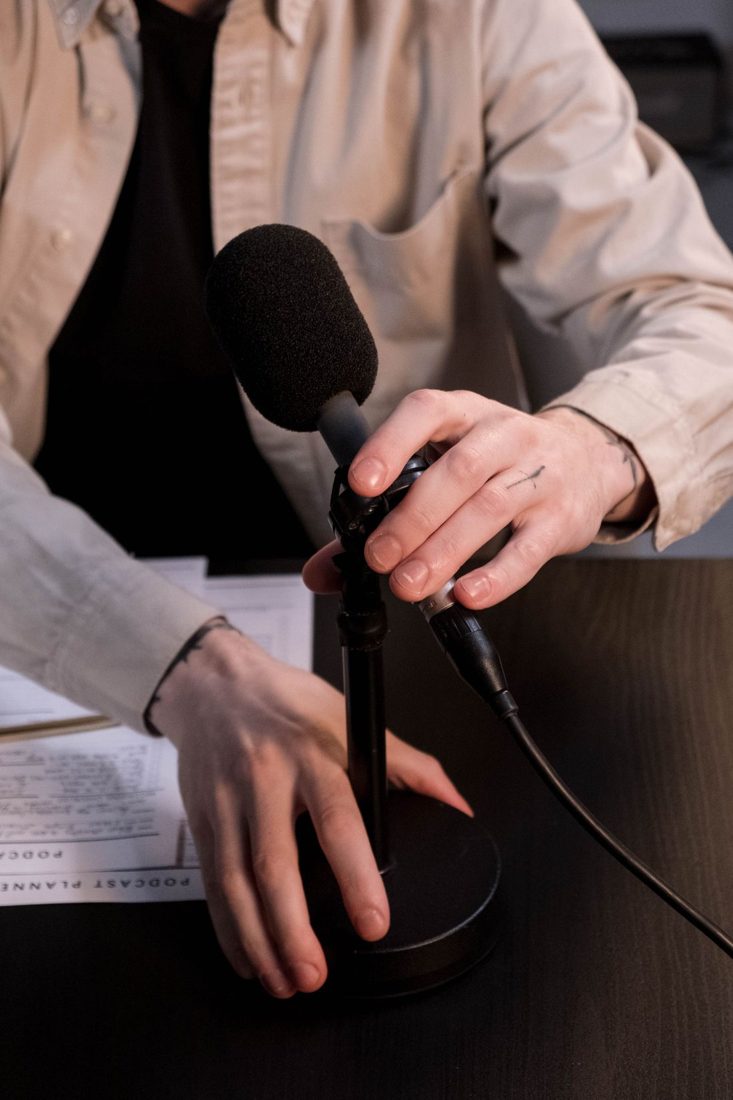
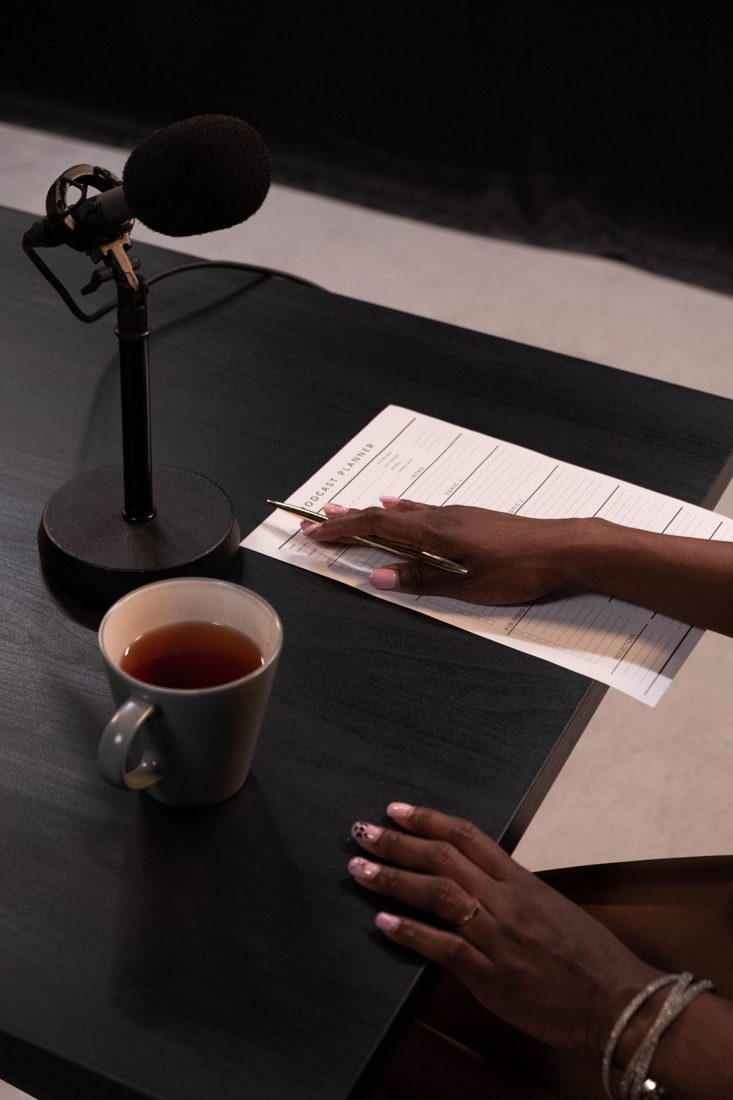
Open the necessary reference material and close unrelated notifications. Put water and notes where you can reach them quietly. Check the microphone, headphones, storage space, and recording destination with a short sample. If there is a guest, confirm that everyone can hear each other and knows how to signal a technical problem.
Rehearse the first minute and the ending
Say the opening aloud. Introduce the subject and give the listener a reason to stay without summarising the whole episode twice. Time one representative section at your natural pace. If the planned material already exceeds the available length, reduce the scope before recording. Prepare a specific final thought so the episode has somewhere to land instead of fading into repeated conclusions.
Keep the outline visible but leave room to respond naturally. During recording, mark mistakes or missing details so you can return to them efficiently. The preparation has worked when you can concentrate on explaining the idea or listening to the guest, with the structure available whenever you need it.