Outdoor ambience can connect separate shots and make a location feel present. It becomes difficult to use when every passage contains grip changes, clothing rub, or a finger brushing the recorder. Decide what scene you need before recording: a steady garden atmosphere, passing traffic, or activity outside a building. Then arrange the equipment so you can leave it alone while the sound unfolds.
Listen before choosing the position
Stand quietly and identify the dominant sounds. A nearby ventilation unit may overpower the birds you wanted, while your chosen corner may catch repeated footsteps. Move a little and listen again. Record from a place you can occupy without blocking others, and avoid capturing private conversations as the focus of a general atmosphere track.
Think about the edit that will use the recording. A wide exterior shot may need a broad sense of place, whereas a close detail may benefit from a more specific sound. Label these intentions separately. A collection of vaguely named outdoor files is harder to use than a few clearly described scenes.
Support the recorder without touching it
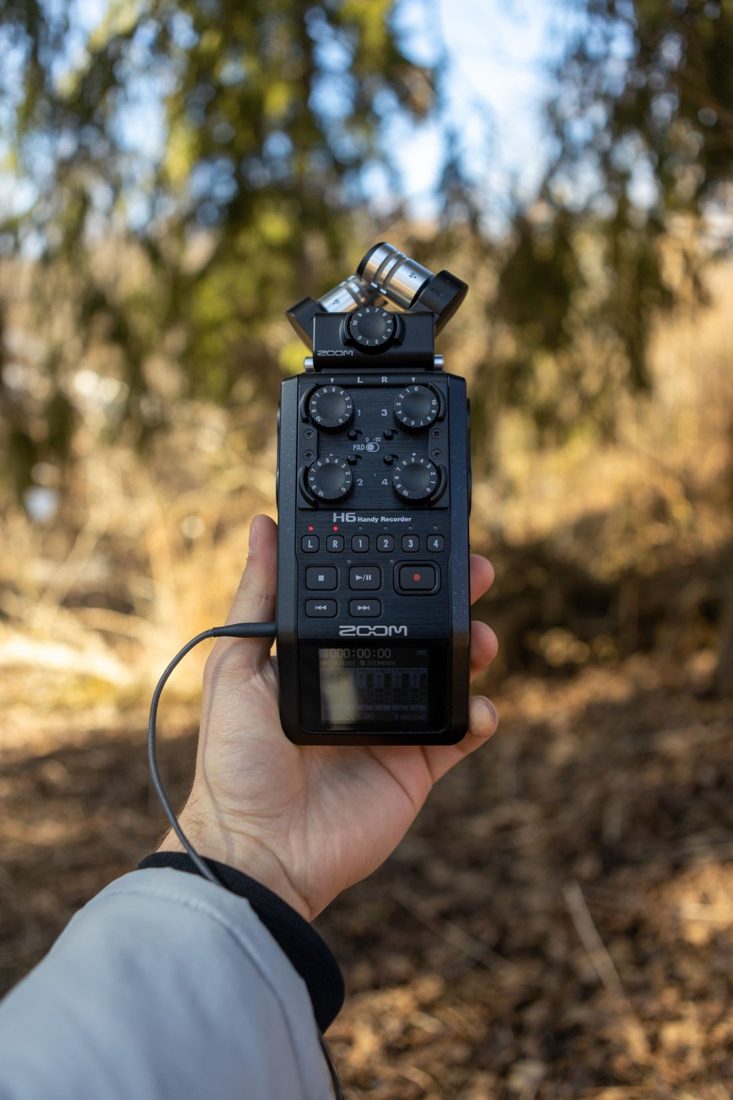
Use a stand or support intended for the device and suitable for the location. Check that it cannot topple or be knocked into a path. Keep cables and straps from tapping the body. If you must hold the recorder, find a stable grip before starting and avoid adjusting controls throughout the usable passage.
Fit suitable wind protection for the microphone and conditions. Handling noise and wind rumble are separate problems; supporting the recorder does not remove airflow across its capsule. Monitor with headphones at a sensible level and listen for both before committing to a longer take.
Leave a usable middle
Start recording, settle into position, and then allow a continuous passage without commentary or deliberate movement. Leave extra time beyond the length you expect to use. A car horn or a brief interruption need not ruin the entire recording if there is enough clean material around it.
At the end, wait before reaching for the stop control. Later, trim away the opening and closing handling sounds rather than placing them under a scene. Note the location description, approximate conditions, and anything that changed during the take. Listen back before leaving, because a silent file or overloaded passage is much easier to replace while you are still there.
Save the original recording and make a separate trimmed version for editing. Give it a name that describes the audible scene, not just the device or date. That small amount of organisation makes it easier to find an atmosphere that fits another shot without rebuilding the location from memory.