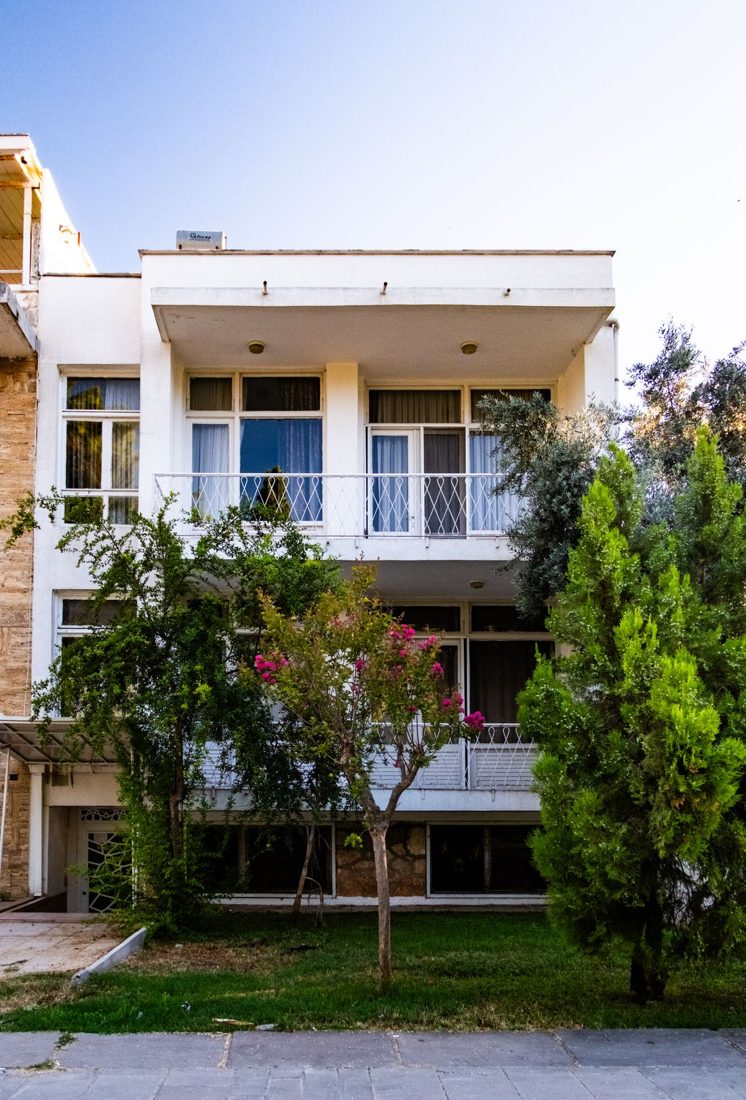
A building can lose its character when the roof, entrance or projecting corner disappears just beyond the frame. The solution is not always a wider lens. First decide which parts explain its shape, then look for a position that includes those relationships without creating a photograph dominated by empty pavement or a nearby obstruction.
Identify the complete outline
Look for the highest point, the widest projection and the entrance or base that gives the structure a clear relationship to the ground. Decide whether you are making an overall view or a deliberate detail. An overall photograph should not accidentally omit a significant roofline. Scan all four edges before shooting. Trees and parked vehicles may conceal part of the outline; moving sideways can help, even when moving directly backwards is impossible.
Explore distance before lens choice
From a permitted public position, try stepping farther away while watching how foreground objects change. A more distant view may fit the building with less extreme upward aiming. Never step into traffic, enter restricted property or back toward an edge while looking through the camera.
If the building still cannot fit, make an intentional partial composition rather than squeezing every feature into a distorted corner. A separate detail of the entrance can complement an overall view instead of forcing one frame to do both jobs.
Keep lines deliberate
Check the camera’s level aids if available. Tilting upward can make vertical lines appear to converge; that may suit a dramatic view, but it should be a choice. Try a more level camera position and compare how much foreground appears. If you plan perspective correction afterwards, leave extra room around the roof and sides. Correcting geometry can require cropping, and a tightly framed peak may disappear even though it was present in the original.
Inspect the corners at full size
Review projecting balconies, roof ornaments and the lowest edge of the building before leaving. Check whether branches cross important features and whether a sign or passer-by adds useful scale or merely interrupts the composition. Take a second frame with slightly more surrounding space for flexibility. Avoid stretching the building indiscriminately during editing; compare the result with the original and retain believable proportions. Keep a detail photograph separate when it tells a different part of the story.
A useful architectural frame makes the intended shape easy to understand. Give the edges the same attention as the centre, explore a safer and clearer viewpoint and allow for later cropping. When a complete view is impossible, a deliberate detail is stronger than an accidental-looking fragment.