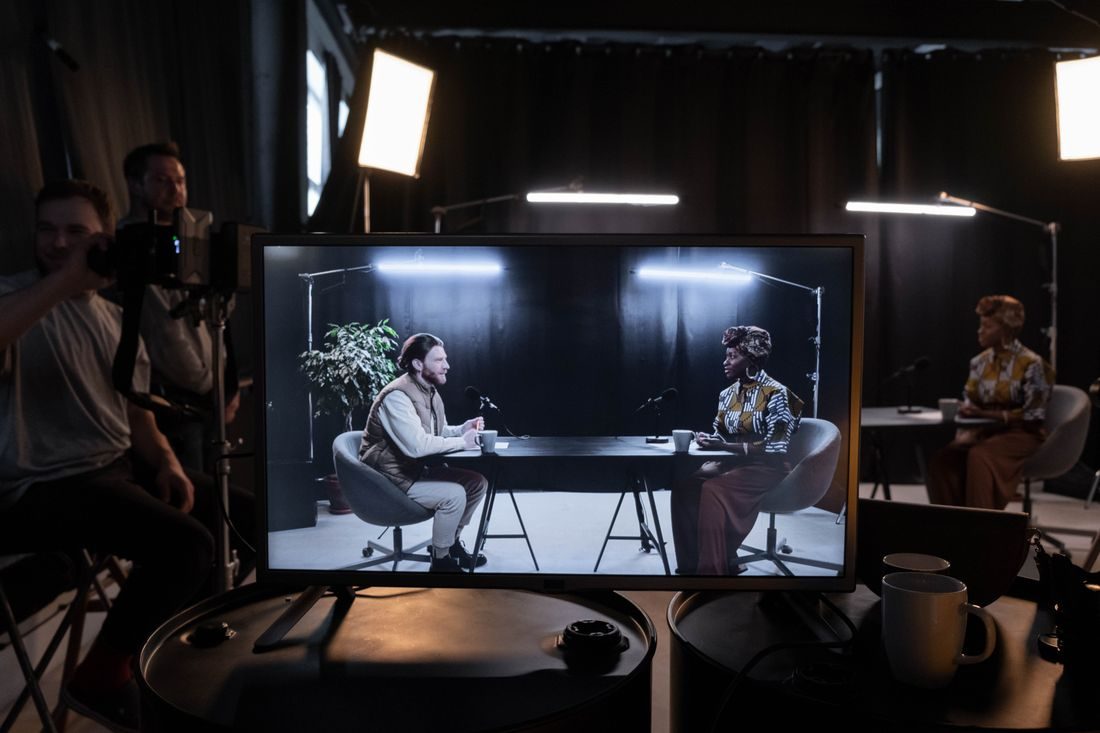
A conversation can become tiring when every hesitation remains, but removing every gap creates another problem: speakers sound rushed and reactions lose their meaning. Start by understanding what each pause does. Some pauses are accidental delays; others signal uncertainty, emphasis or a change of thought. Edit for comprehension rather than the smallest possible duration.
Listen before cutting the picture
Play a substantial section without stopping. Note where your attention genuinely drops and where a pause helps a statement land. A delay while someone searches for a cable may be removable; a short silence after an important answer may belong to the conversation. Write these observations before making numerous tiny cuts. Otherwise, it is easy to become focused on a waveform’s empty spaces instead of the meaning of the exchange.
Preserve the relationship between speakers
Keep enough of the question or context for an answer to make sense. Removing a hesitation can change how certain someone appears, and moving a reaction can imply a response that did not occur. Avoid those changes. If you shorten an answer, maintain its qualifications and intent.
Watch the listening person as well as the speaker. A nod, inhale or small expression can explain why the next sentence begins when it does. Retain useful reactions rather than treating every non-speaking moment as disposable.
Make joins around natural phrasing
Trim at complete thoughts where possible and keep appropriate breathing room around words. Listen for cut-off consonants, abrupt breaths and changes in room sound. Use a suitable small audio fade when a join needs it, then review at normal speed. Do not remove all breaths; a voice can sound disconnected from a real person when every inhalation disappears. If the image jumps conspicuously, use a genuine relevant alternative view or reconsider how much you need to remove.
Review the pace without watching the timeline
Play the edited section as a viewer would, preferably away from the detailed edit controls. Does the speaker have time to finish a thought? Can you follow the question-and-answer relationship? Compare a slightly looser version if the sequence feels relentless. Keep the original recording and an earlier edit so you can restore context. A duration target may require choosing fewer topics rather than compressing every sentence until the conversation becomes difficult to absorb.
A well-paced conversation still contains human timing. Remove delays that obstruct the point, retain pauses that explain thought or emotion and protect the relationship between statements. When a shorter edit feels hurried, reduce the number of ideas before stripping away the space that makes them understandable.