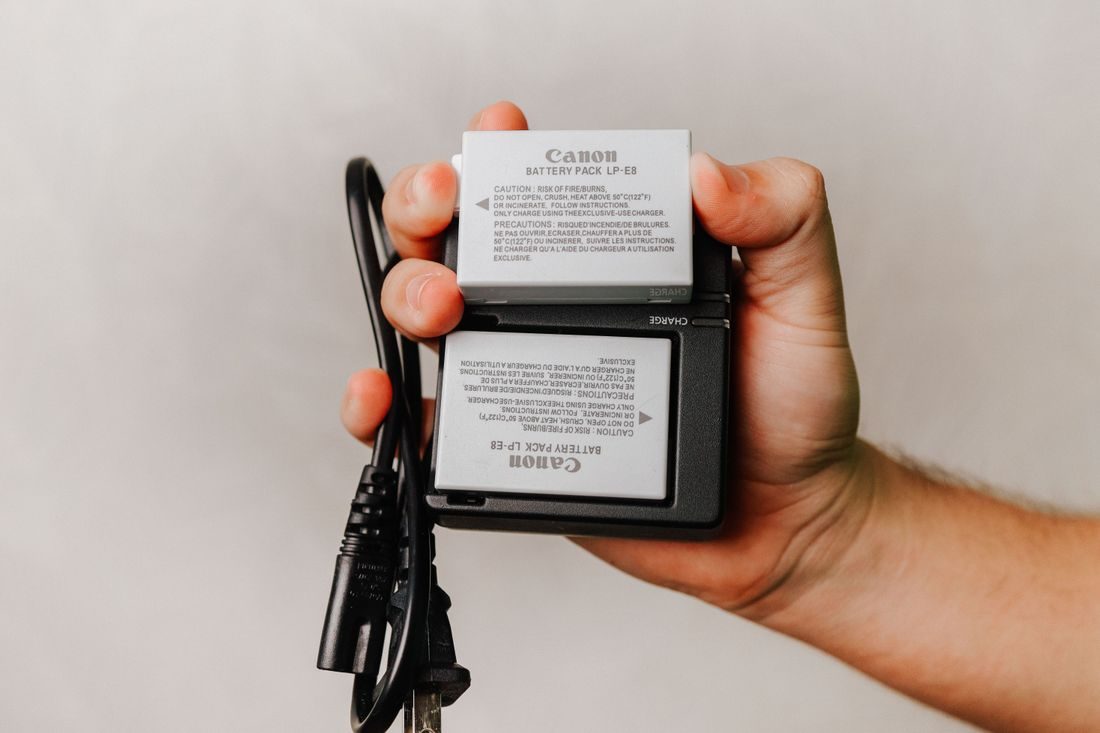
Battery management becomes difficult when several identical packs move between the camera, charger, and bag. A quick glance may not reveal which one is ready or which stopped working halfway through a take. Give each battery an identity and use a clear ready-to-used flow. Then plan the session around checked equipment rather than assuming every battery will last as long as it did on another day.
Identify and inspect the packs
Confirm the exact compatible battery type for the camera and use the charging equipment specified for it. Label batteries in a way that does not cover contacts, warnings, or fitting surfaces. A short identifier such as B1 helps connect a problem observed during recording with a particular pack later.
Check for damage and follow the manufacturer’s instructions if a battery appears abnormal. Do not continue using a questionable pack simply because it can still power the camera. Keep terminals protected in storage and transport, separated from loose metal objects. Nikon’s battery guidance, for example, calls for replacing the terminal cover during transport.
Create distinct ready and used positions
Use separate compartments or clearly labelled cases for charged and used batteries. Agree on the system with anyone assisting. Turning a battery around can be ambiguous if another person does not know the convention; words or visibly different containers are easier to explain.
After a change, move the removed pack to the used position immediately. Note any unexpected shutdown or unusually short performance before the detail is forgotten. Avoid mixing a partly used battery back into the ready supply without recording its state.
Plan changes around the recording
Check battery status during breaks and replace a low pack before an important long take when appropriate. Actual runtime varies with the equipment and how it is used, so treat previous experience as planning information rather than a guarantee. Allow for displays, accessories, and the camera’s intended recording conditions.
If charging at the location, confirm an appropriate power source and a suitable place for the approved charger. Follow its operating and ventilation instructions. Assign responsibility for moving charged packs back into the ready compartment; a battery sitting in a charger is not useful if nobody knows it is available.
Close the day with a record
Count the batteries back into the kit and note which need charging or further inspection. Use the manufacturer’s storage guidance when the next session is not imminent. A small record of recurring trouble is more useful than repeatedly treating the same unreliable pack as a fully ready spare.
Keep the system visible and simple enough to follow during a busy changeover. Stable labels, protected storage, and a clear movement from ready to used prevent many avoidable mix-ups. Review the day’s consumption afterwards so the next recording plan includes a realistic supply and charging schedule.